Albuquerque Ductwork Cleaning & Air Care for Investment Properties
Kayla Johnson & Duke City Team
5 min read
Commercial Real Estate & Asset Preservation
Maximizing Asset Value Through Strategic Ductwork
For commercial real estate and property investors in the Albuquerque area, high-performing ductwork is a cornerstone of overall asset preservation and profitability. Led by Kayla Johnson, Duke City Ductwork approaches commercial systems with an investor’s mindset, recognizing that hidden mechanical infrastructure directly drives tenant satisfaction and operating expenses. In multi-tenant offices, retail centers, and industrial facilities, a poorly designed or deteriorating distribution network leaks conditioned air into unconditioned voids, leading to severe utility waste and accelerated wear on expensive central plant equipment. By systematically sealing, insulating, and balancing ductwork, property owners protect their capital investments from avoidable depreciation.
Operating commercial properties in Albuquerque presents unique environmental challenges, from wide diurnal temperature swings to arid, dust-prone conditions. Kayla Johnson and the Duke City Ductwork team prioritize durable materials, including mastic-sealed seams and robust sheet-metal fabrication, engineered to withstand intense thermal expansion and contraction. Investment properties with outdated or uninsulated duct lines often struggle with significant thermal transfer before conditioned air reaches occupied tenant zones. High-efficiency insulation and rigid distribution trunk lines keep climate control consistent, whether heating during freezing desert mornings or cooling through triple-digit summer afternoons.
Commercial Investor Factor
Air duct leakage in commercial properties can account for up to 30% of total HVAC energy loss, driving up operating costs in gross leases or triggering costly tenant disputes in triple-net agreements.
Energy efficiency is one of the most direct levers commercial property owners have to improve their Net Operating Income (NOI). Air duct leakage in large commercial spaces can account for up to 30% of total HVAC energy loss, unnecessarily inflating utility overhead in gross-lease structures or driving tenant complaints in triple-net setups. Duke City Ductwork provides comprehensive commercial duct assessments to identify pressure imbalances, flow restrictions, and duct separations. By retrofitting and sealing duct paths, HVAC blowers and chillers run at significantly lower duty cycles, immediately reducing utility bills and extending the lifespan of costly rooftop units (RTUs).
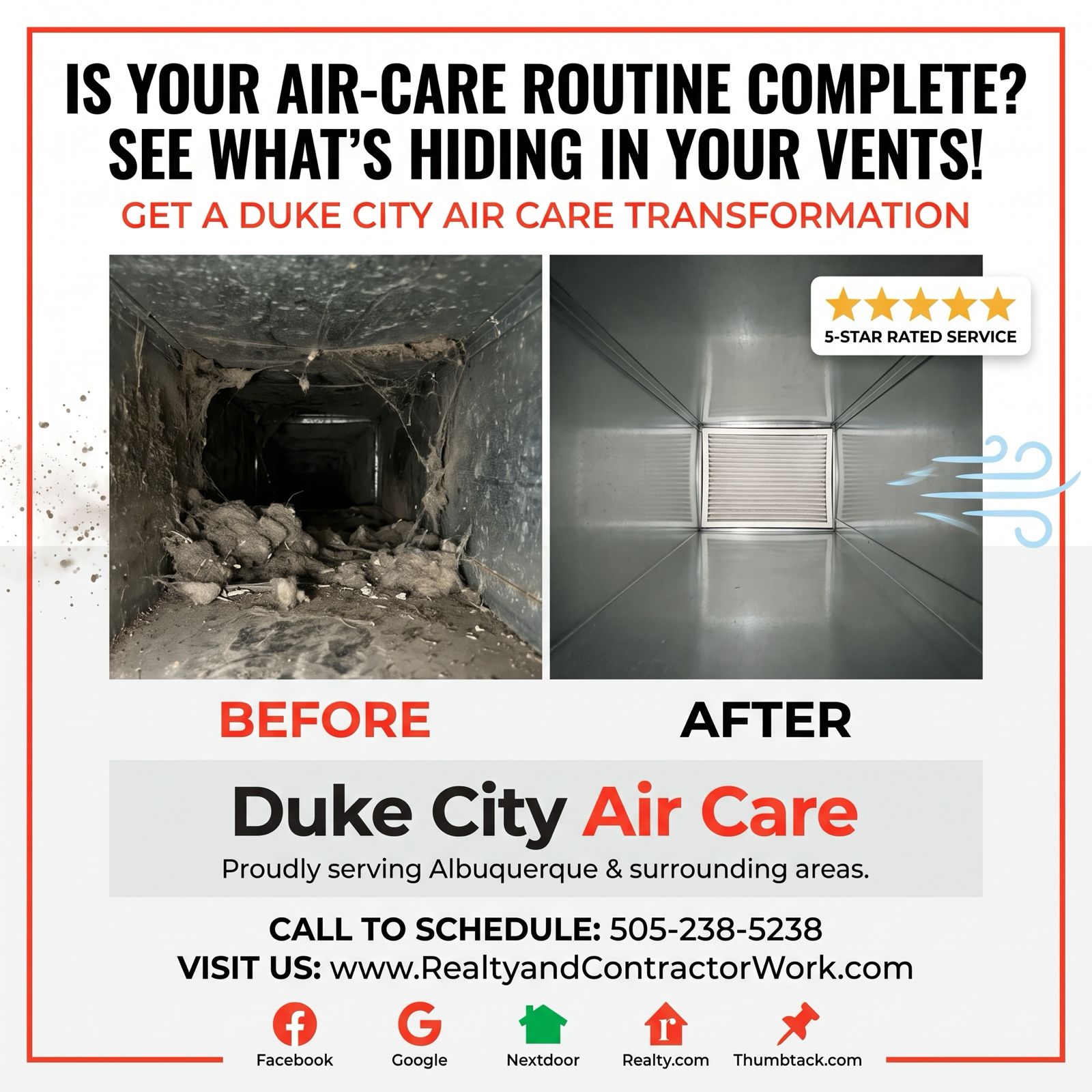
Commercial tenant retention hinges heavily on indoor environmental quality (IEQ) and occupant comfort. Neglected commercial ductwork frequently accumulates particulate matter, ambient desert dust, and microbial contaminants that degrade indoor air quality and generate hot-and-cold spots across partitioned suites. Kayla Johnson focuses on commercial airflow balancing and duct sanitization to eliminate stagnant zones and reduce dust circulation. Clean, well-regulated air distribution keeps commercial tenants healthy and productive, leading to fewer maintenance work orders, higher lease renewal rates, and fewer vacancies across an investor's portfolio.
During property acquisitions, capital improvement planning, or tenant improvements (TI build-outs), a thorough ductwork evaluation is critical due diligence. Duke City Ductwork partners with commercial investors to map existing mechanical runs, verify structural integrity, and ensure complete compliance with local building codes and ventilation standards. Whether reconfiguring layout drops for an incoming office tenant or replacing degraded flexible ductwork during a property repositioning, Kayla Johnson and Duke City Ductwork deliver streamlined mechanical workflows. This proactive approach prevents costly post-closing surprises and ensures the building's mechanical backbone supports long-term commercial valuation.
Frequently Asked Questions
Key insights for commercial property owners and real estate investors in Albuquerque.
HVAC systems account for the largest share of a commercial or residential property’s utility expenses. When ductwork is clogged, improperly sealed, or burdened with debris, blowers and compressors must draw significantly more amperage to circulate conditioned air. Duke City Air Care restores factory-level static pressure and thermal efficiency through comprehensive air duct cleaning, sealing, and balancing. This lowers operating overhead, reduces run times on central mechanical equipment, and minimizes emergency maintenance calls—directly boosting the property’s NOI and overall capitalization rate.
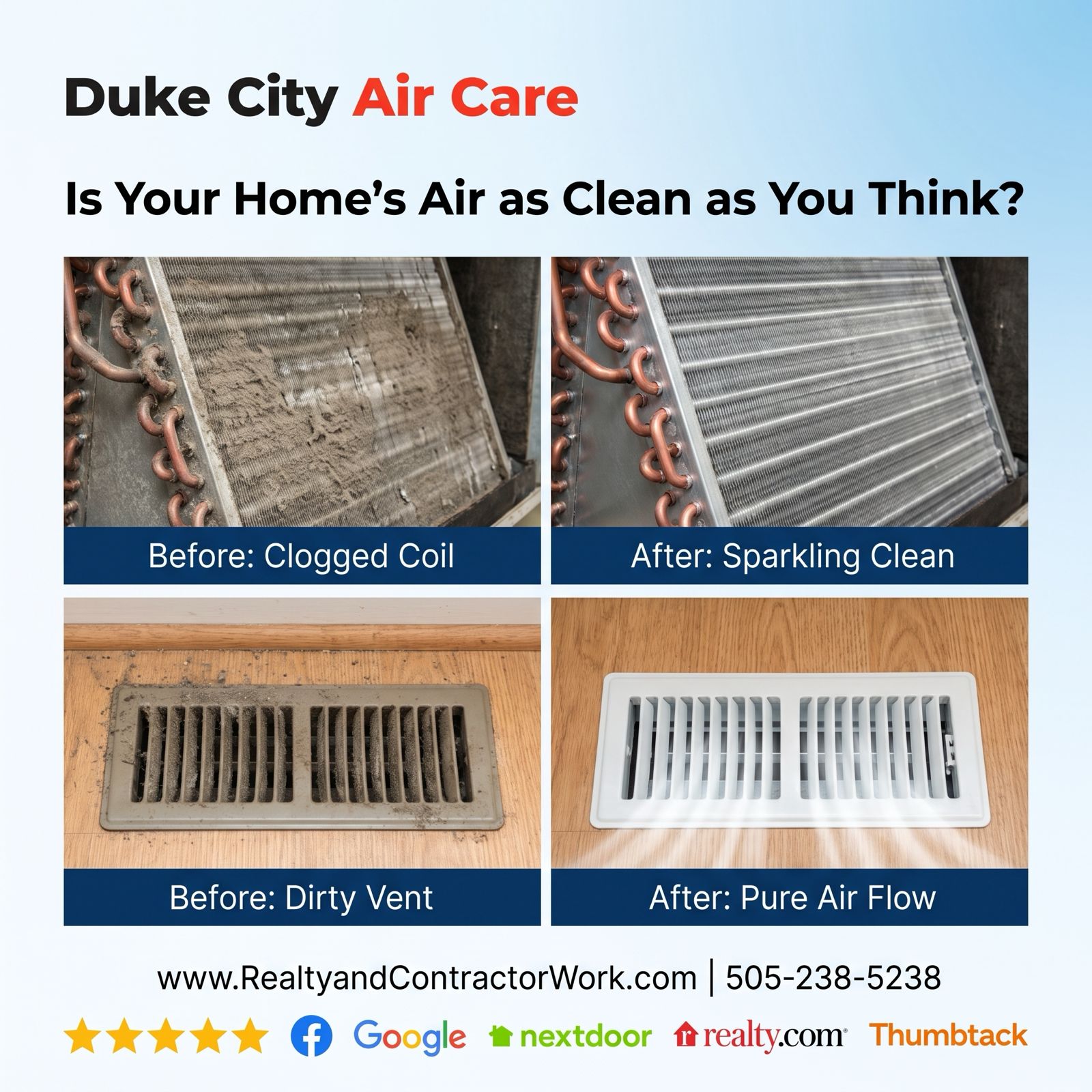
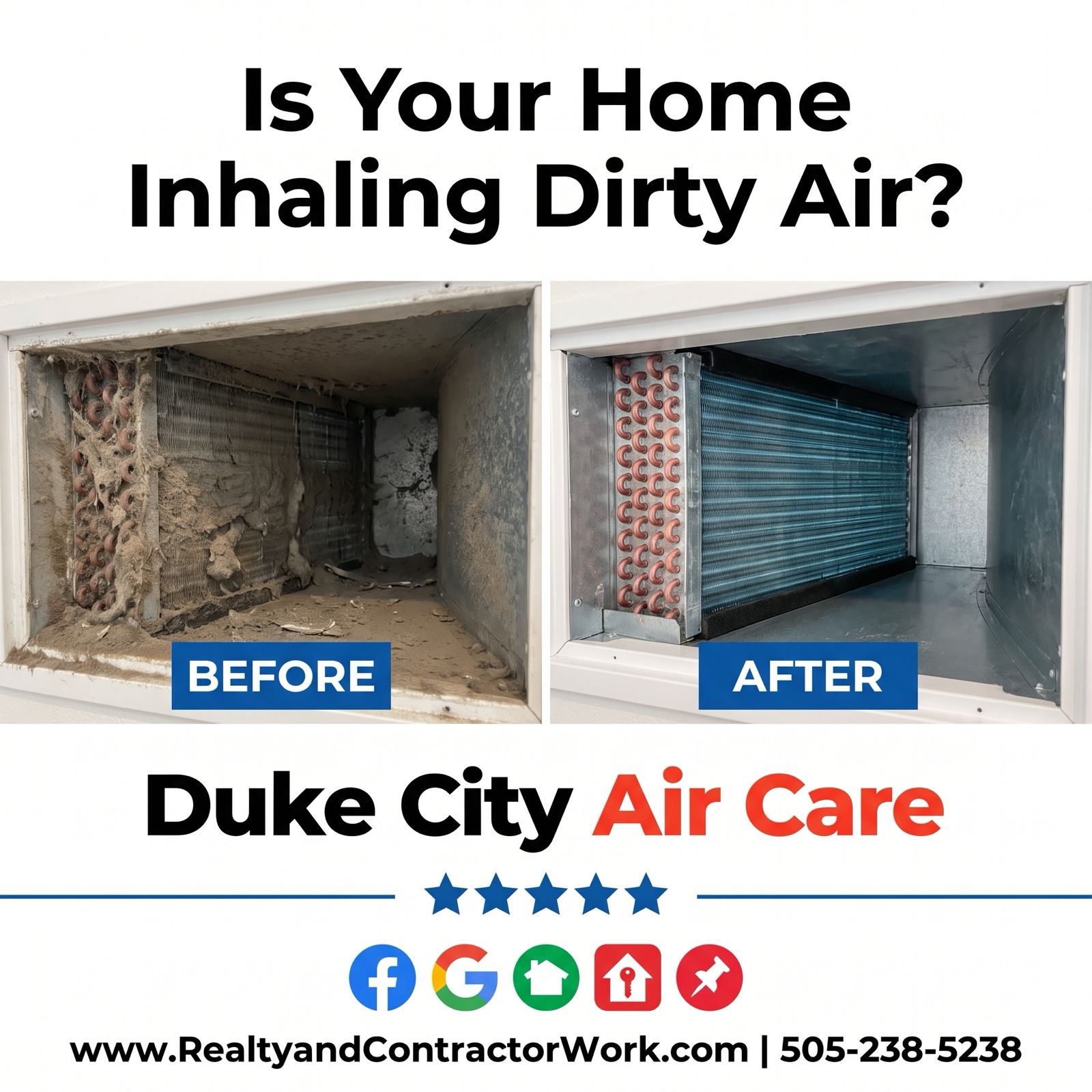
During acquisitions, visual home and commercial inspections rarely assess the internal condition of the mechanical distribution system. Years of deferred maintenance by prior owners can leave behind heavy dust accumulation, drywall remnants from past renovations, pest infestations, or mold colonization within duct runs. Bringing in Duke City Air Care during due diligence provides investors with a clear, camera-inspected baseline of the air delivery network. Identifying structural damage, air leaks, or contamination before closing allows buyers to negotiate capital expenditure (CapEx) credits or avoid costly surprises post-closing.
Indoor Environmental Quality (IEQ) and thermal comfort are primary drivers of tenant satisfaction and lease renewal. Poorly maintained duct networks lead to uneven airflow, persistent hot-and-cold zones, unpleasant odors, and high ambient particulate levels that trigger allergy complaints. Duke City Air Care eliminates odor-causing microbes, dust, and contaminants while balancing system flow. Tenants experience cleaner, consistent air distribution and fewer respiratory irritants, leading to higher renewal rates, reduced tenant turnover costs, and fewer routine maintenance tickets for property managers.
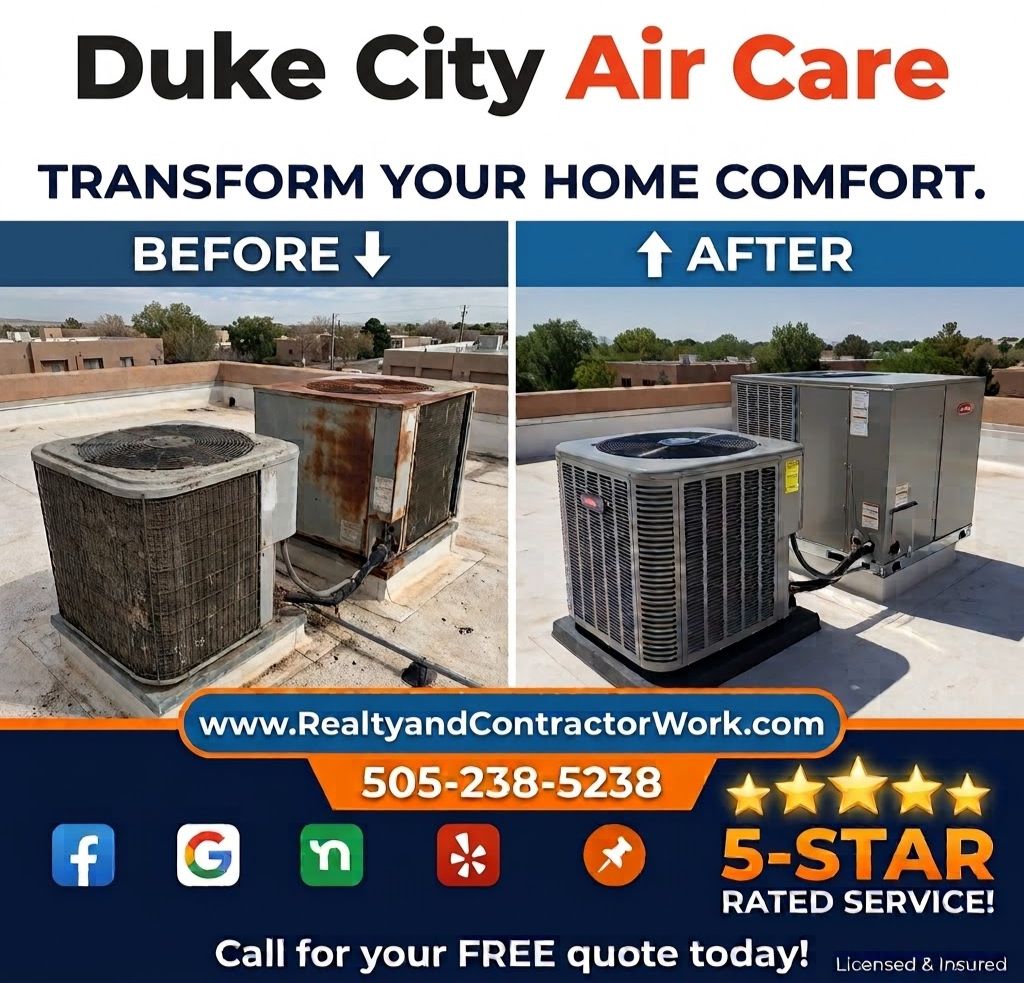
Restricted airflow from particulate buildup acts as an artificial bottleneck for heating and cooling equipment. It forces evaporator coils to freeze, overheats heat exchangers, and causes blower motors to burn out prematurely. By maintaining clean distribution pathways and clear plenums, Duke City Air Care ensures optimal airflow across the coils and heat exchangers. This preventive care protects owners from premature, five-figure replacements of rooftop units (RTUs) or split systems, extending equipment service life well beyond standard operational projections.
Tenant turnovers and remodeling projects (such as drywall sanding, flooring installations, and painting) generate high volumes of fine, abrasive dust that get pulled directly into the return air vents. If left unaddressed, this construction debris circulates through the system, coats sensitive mechanical components, and settles on newly finished surfaces for the incoming tenant. Duke City Air Care performs deep-system post-construction cleaning, ensuring the property is truly move-in ready, odor-free, and operating cleanly before the new lease term begins.
Local Service Areas & Locations
Visit us or connect with our Duke City specialists across Albuquerque and central New Mexico.
Duke City Air Care
3620 Wyoming Blvd NE Ste L7, Albuquerque, NM 87111
Kayla Johnson Dream Catcher Realty & Construction
Albuquerque & Surrounding Communities, NM
Ready to Maximize Your Albuquerque Property's Value & Air Quality?
Partner with Kayla Johnson and Duke City Air Care for investor due diligence, commercial duct sealing, and HVAC optimization across Albuquerque.